

Comprehensive Hearing Evaluations: Your First Step on the Journey to Better Hearing
Hearing loss and hearing challenges come on at such a slow pace that you don’t notice the day-to-day changes that accumulate over an extended period of time. Consequently, acknowledging changes to your hearing health can be tough and committing to get the help you need is a huge feat.
Hearing Evaluations
Sensorineural Hearing Loss
Sensorineural hearing loss is the most common type of permanent hearing loss. It is the result of damage to either the tiny hair-like cells of the inner ear, known as stereocilia, or the auditory nerves that transfer sound signals to the brain.
Children can be born with sensorineural hearing loss due to a genetic syndrome or an infection passed from mother to fetus, but the majority of sensorineural hearing loss cases develop later in life (presbycusis, or age-related hearing loss) or ongoing exposure to loud noise (noise induced hearing loss or NIHL).
Other causes may include:
Infections like mumps
Meniere's disease
Use of ototoxic drugs or medications
Acoustic neuroma or a cancerous growth in the inner ear
Concussion or traumatic brain injury
Autoimmune diseases or thyroid disease
In addition to reduced hearing clarity, characteristics of sensorineural hearing loss can include feelings of unsteadiness or dizziness, tinnitus, and the early onset dementia or cognitive decline.
Conductive Hearing Loss
Conductive hearing loss involves an obstruction or damage to the ear canal, eardrum, or middle ear components that prevents sound signals from reaching the inner ear. Depending on the cause of the obstruction, conductive hearing loss can be temporary or permanent.
With conductive hearing loss, the sensory organs of the inner ear remain intact, so hearing challenges usually involve loudness issues rather than problems with sound clarity.
Mixed Hearing Loss
Mixed hearing loss is a combination of sensorineural and conductive hearing loss in which either sensorineural or conductive hearing loss is already present before the other condition develops. There are three common instances for this hearing loss combination, including:

Trauma-Induced Sensorineural Hearing Loss
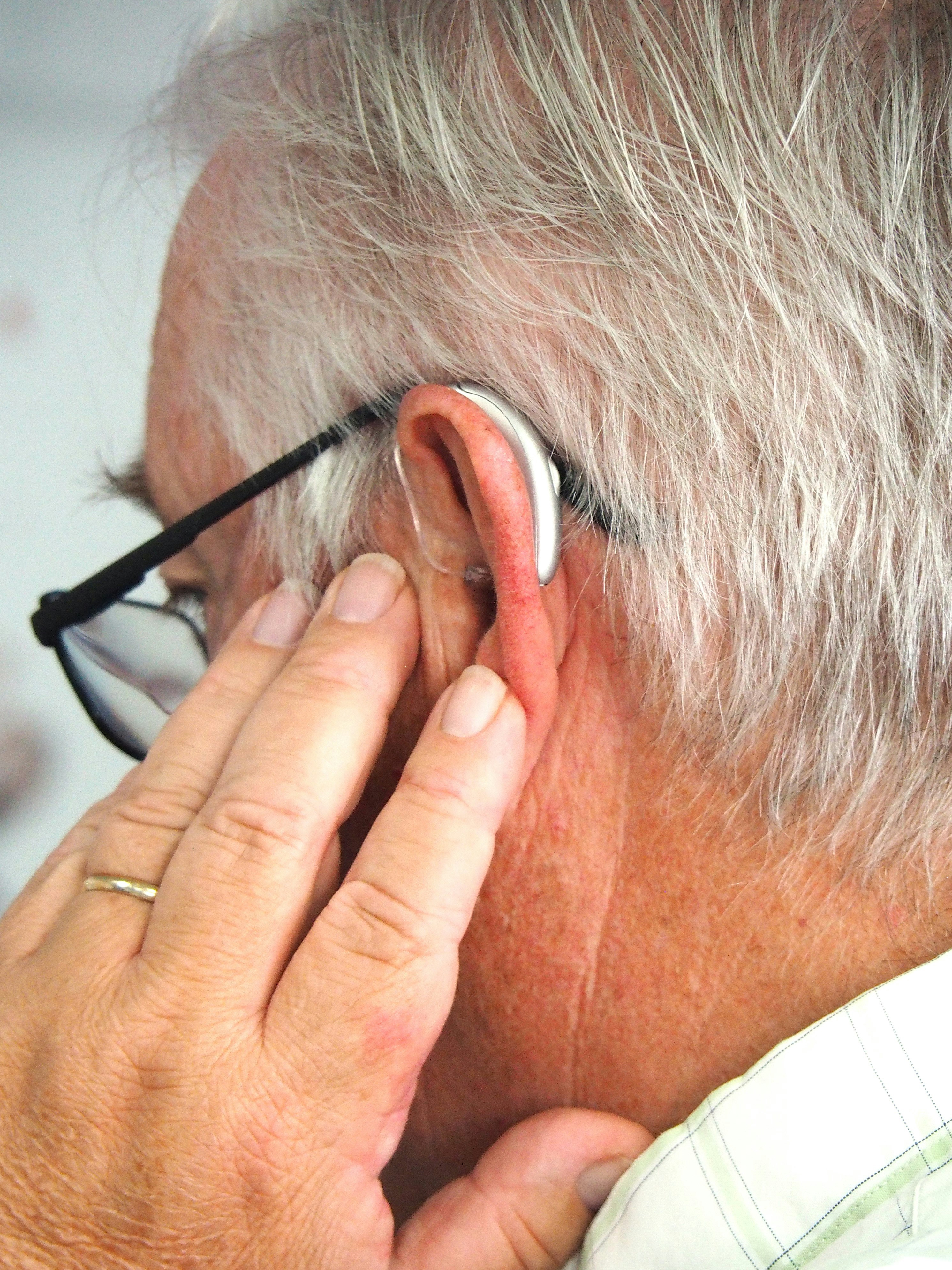
Age-Related Sensorineural Loss
Trauma-Related Mixed Hearing Loss
Those experiencing mixed hearing loss will struggle with clarity and loudness issues related to both types of hearing loss.
Eartone Hearing Aid Center’s Hearing Evaluations Process
Intake
Your hearing care professional will start your hearing evaluation with an intake process that includes a conversation about you. We’ll ask about your health history, the symptoms you are experiencing, your lifestyle (vocation, social life, hobbies and activities, etc.), and address any questions or concerns you might have. This conversation helps us gauge your hearing loss experience, its impact on your quality of life and information that might help reveal its cause.
Physical Ear Inspection
Hearing Evaluations
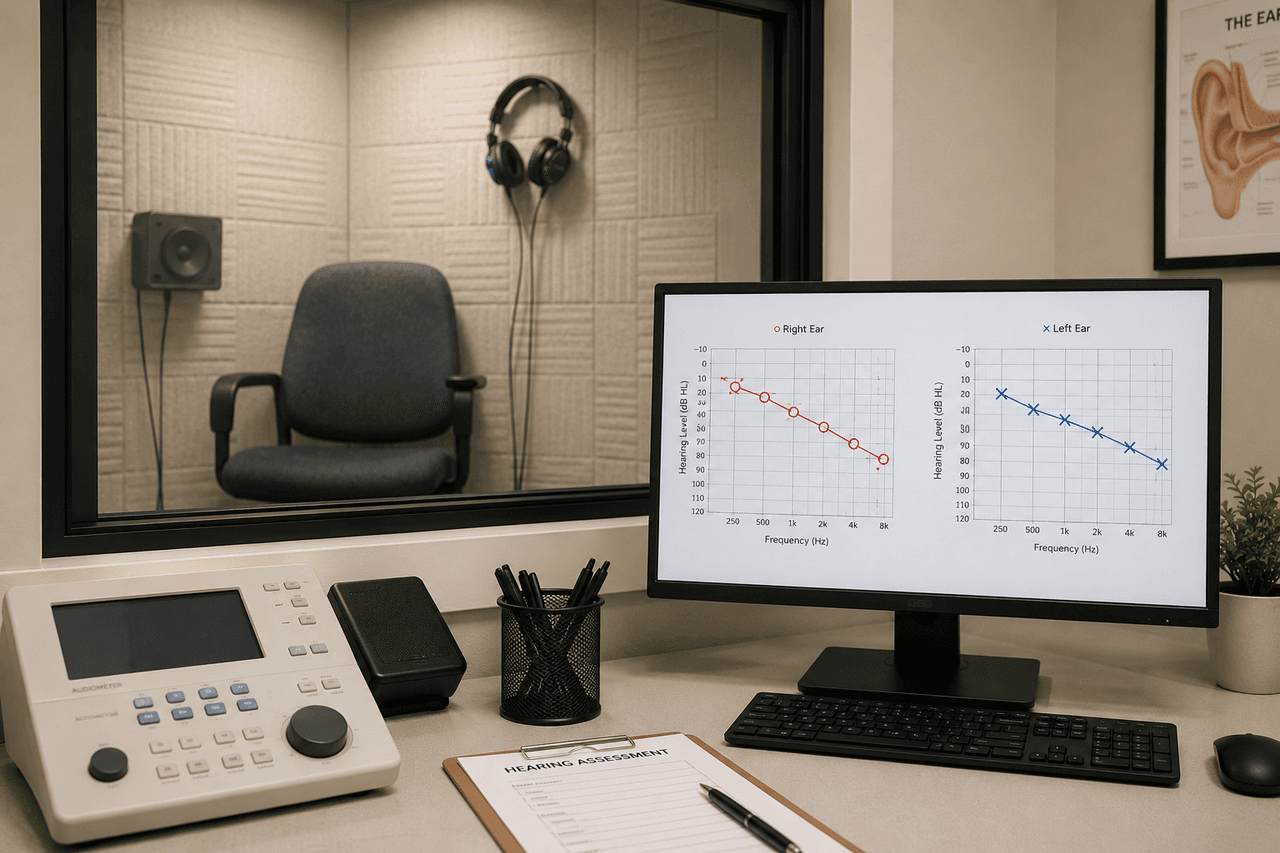
Once your ears have been inspected for any damage, we will move on to a series of noninvasive and painless hearing evaluations that will help identify the type of hearing loss you’re experiencing as well as its severity.
We have several different methods available to provide a comprehensive evaluation, including:
Pure Tone Audiometry
Pure tone audiometry helps identify the type and severity of your hearing loss by establishing your hearing threshold. It includes the transmission of pure tones transmitting through headphones in descending levels from 250-8000 Hz.
Speech Audiometry
Speech audiometry is the combination of two separate processes designed to measure how well you understand speech.
Your Speech Reception Threshold (SRT) establishes the low-end threshold of speech reception by presenting spondee words (composed of two syllables pronounced with equal stress and effort) in descending levels and measuring your responses.
The second type of speech audiometry, your Speech Discrimination Score, is a calculated percentage of the number of phonetically-balanced words you can repeat correctly at a comfortable listening level.
Bone Conduction Test
Bone conduction testing bypasses the outer and middle ear, transmitting sound signals directly to the inner ear through the surrounding bones using a special type of headband.
When we compare Pure Tone test results and Bone Conduction test results we can distinguish between sensorineural or conductive type hearing loss.
Speech-in-Noise (SNR) Testing
Understanding speech in background noise is one of the most common hearing challenges.
The Speech-in-Noise (QuickSIN®) evaluation helps assess how well you are able to follow conversations in everyday environments such as restaurants or social gatherings, giving your provider valuable insight into your real-world listening needs and helping guide appropriate hearing solutions.
Results
Unlike many medical tests, you don’t have to wait for your hearing evaluation results. Since they are captured in real-time during the appointment, your hearing care professional will be able to present and discuss them as soon as the evaluation is finished.
Our hearing aid specialist will review your results and explain what they mean, then provide you with treatment solutions or preventative measures you can take to avoid ongoing damage if you are at risk of developing hearing loss.
We see ourselves as partners on your journey to better hearing, providing you with the highest standards of care befitting your hearing health needs, while also taking your lifestyle, budget and personal preferences into account.